
In the small, overcrowded world of horror games, it’s rare to find a title that truly innovates on its fundamental mechanics. Hell Clock is one of them. Forget easy jump scares and hordes of enemies; this game pits you against a far more implacable and terrifying adversary: time itself. It’s an anxiety-inducing, intelligent and controlled descent into hell, proving that the greatest fear of all is the approaching deadline.
The Twelve Blows of Madness
You play the role of Arthur, a historian specializing in occult artifacts, called in to appraise a legendary piece: the astronomical clock at Blackwood Manor, infamous for having been the scene of the disappearance of an entire family a century earlier. As soon as you arrive, the doors close. You’re trapped. The clock starts ticking, and its sinister chime signals the beginning of a hellish cycle. You have until midnight to unlock the manor’s secret, or the night will begin again, and again.
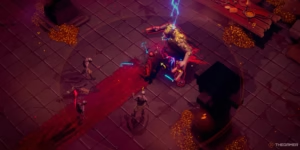
Atmosphere is the game’s strong point. The manor is a character in its own right, a Gothic labyrinth oozing despair. The story unfolds through notes, diaries and spectral visions, gradually piecing together the tragedy of the place. It’s a classic horror tale in its theme, but told with frightening effectiveness.
A Race Against Death and Time
Hell Clock is a first-person survival puzzle game whose entire gameplay revolves around its clock. The mansion isn’t a place, it’s a timetable. With each passing hour, marked by a bloodcurdling chime, the world changes. A door unlocked at 9pm becomes sealed at 10pm. A peaceful corridor becomes the hunting ground of an entity at 11pm. The game forces you to learn the “routine” of the house. It’s a brilliant time-loop mechanic, where time management becomes your most precious resource and your greatest constraint.

The puzzles are complex and often temporal: you’ll need to find a clue in a room accessible only in the early evening to solve a puzzle in another wing of the mansion before midnight strikes. To add to the pressure, a nightmarish, immortal entity stalks you relentlessly. It too evolves over time, becoming faster, more aggressive and more unpredictable as the hours pass. Learning its rounds at 10pm is one thing, but discovering that at 11pm it can now walk through walls is another form of terror.
The system is demanding, even punitive. Making a mistake at the last hour and having to restart an entire cycle can be frustrating, but the sense of satisfaction when you finally manage to optimize your route to solve a new piece of the puzzle is immense.

The Elegance of Dread
Visually, the game opts for a dark, polished realism. Lighting is the real graphic protagonist, with plays of light and shadow that create permanent tension. The artistic direction of the mansion is splendid in its dilapidation, with each room telling a story. This is a game that uses beauty to create unease, and it works wonderfully.

The Tic-Tac of Anxiety
The sound design is a masterpiece of anxiety-inducing minimalism. The sound that accompanies you for 90% of the game is the oppressive, steady ticking of the cursed clock. This sound becomes the heartbeat of your anguish. For the rest, it’s just floor creaks, distant whispers and the ominous sounds of the creature chasing you. Silence is as important as noise, and the chimes that chime each new hour are a pure moment of terror.
The Time of Understanding
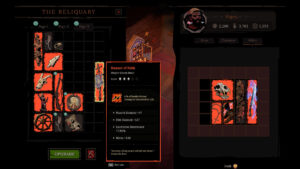
Expect to suffer. Your first success will probably take you between 15 and 20 hours, the time it takes to memorize the house’s cycles and the solutions to the puzzles. Replayability is more limited, as once the main mystery is solved, the element of surprise wears off. However, the game does offer a number of challenges and secrets for hardcore players who want to complete it in record time.
Hell Clock is a brilliant, demanding and incredibly intelligent horror proposition. By making time its main mechanism of play and fright, it sets itself apart from all current production. It’s a grueling experience, requiring patience and thought, but rewarding the player with a rare sense of accomplishment. If you’re looking for a horror game that appeals more to your brain than your reflexes, and you’re not afraid of failure, this infernal clock is a masterpiece not to be missed under any circumstances.
Rating: 8/10
Views: 8