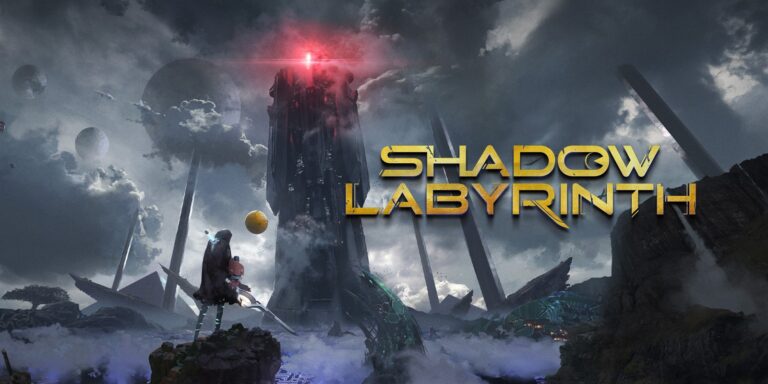
On paper, Shadow Labyrinth has everything going for it. Taking the timeless concept of Pac-Man – the agonizing escape into a labyrinth – and transposing it into a dark, modern 3D infiltration game is an idea of genius. The first few minutes are exhilarating. We rediscover the primal fear of being hunted by spectres, the tension of hiding around a corner. But once the initial surprise has worn off, the labyrinth reveals walls far more frustrating than those of its corridors: those of a repetitiveness and lack of daring that prevent the game from realizing its full potential.
A promising concept…
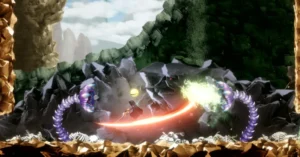
Let’s not get carried away: the beginnings are excellent. The idea of turning pac-gummies into orbs of light to be collected, and super-pac-gummies into temporary “Phases” that turn prey into hunters, works wonderfully. Third-person 3D gameplay changes the whole perspective. Hiding, spying on the ghosts’ rounds, planning your sprint to the next set of orbs… all this creates a palpable tension that the top-down view of the original could only suggest.
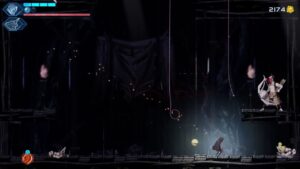
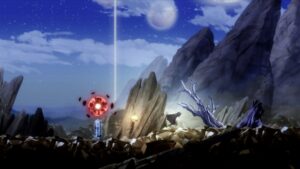
The atmosphere, supported by a highly successful neo-retro art direction and an eerie minimalist sound design, is the game’s undisputed strong point. The contrast between the dark corridors and the bright neon of objects and enemies is magnificent, and the silence, broken only by the “beeps” of orbs and the spectral sounds of ghosts, is very effective.
…that runs out of steam too quickly
The problem is that this formula, however brilliant, never renews itself. After the first two hours, you feel you’ve seen everything the game has to offer. The gameplay loop remains strictly identical from the first level to the last. The mazes get bigger and longer, but not necessarily smarter or more complex in structure. There’s no sense of smarter challenges, just longer, more tedious routes.
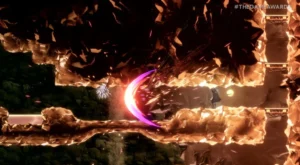
This repetitiveness is accentuated by an artificial intelligence that quickly shows its limits. At first, the “Shadows” are terrifying. Then we learn their very basic patrol patterns. We understand that Pinky will always try to cut us off in the same way, that Blinky will charge in a straight line, and that Clyde will stay in his zone. Once their routines have been memorized, most of the tension evaporates, giving way to a simple avoidance routine. Fear gives way to boredom, and that’s the worst thing that could happen to a game based on tension.
A half-hearted conclusion
In the end, Shadow Labyrinth is a frustrating experience. It’s the perfect example of a golden concept that suffers from too timid an execution. The game never dares to complicate its mechanics, add new elements or surprise the player once the basic formula has been established. We’re left with the feeling of immense potential that has only been scratched.

It’s a game that’s appreciated for its initial idea, for the thrill of the first few games, but which cruelly struggles to hold up over time. You end up going round in circles in this labyrinth, not because you’re lost, but because the game itself has nowhere to go.
Rating: 6/10
Views: 2