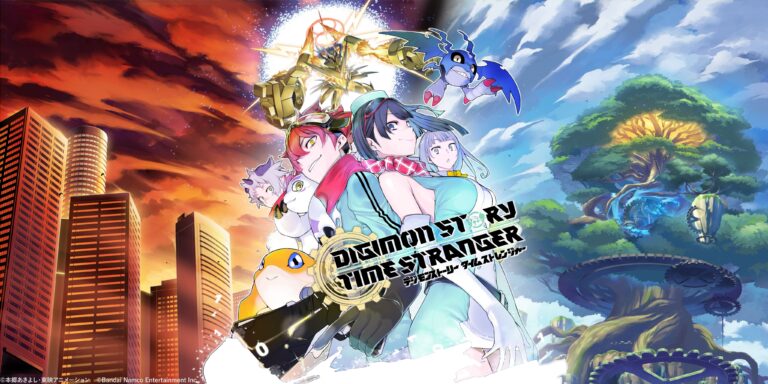
After the critical and commercial success of the Cyber Sleuth duology, the Digimon Story series kept a low profile. Now it’s back with Time Stranger, a brand-new adventure that promises a journey through the eras of the Digital World. The result is a solid, generous JRPG with a captivating story, but one that struggles to shake off a comfortable formula and a few recurring flaws that prevent it from achieving excellence.
The Digital Paradox
You play a young “Chrono-Tamer”, a human capable of time travel, who finds himself enlisted by a mysterious organization to repair temporal anomalies that threaten to destroy the Digital World. Your quest will take you to past, present and future versions of iconic locations, and to encounter Digimon in never-before-seen settings.
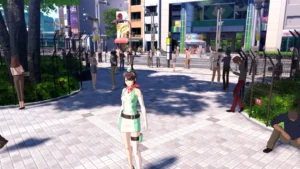
The plot is without doubt the game’s greatest strength. The story is more mature than it appears, tackling complex themes such as paradox and determinism with careful writing. The mystery surrounding the “Time Strangers”, the entities at the origin of chaos, is well handled and keeps you on the edge of your seat. It does, however, get off to a rather slow start, with very long dialogue phases that can dampen the enthusiasm of the first few hours.
A proven formula… and proven only
If you’ve played Cyber Sleuth, you’ll be on familiar ground. Very familiar. The core of the game remains the same: a turn-based JRPG where you collect, train and evolve hundreds of Digimon. The gameplay loop is as diabolically addictive as ever. Spending hours optimizing your team, unlocking super-powered Digivolutions and filling out the Compendium remains the guilty pleasure that makes the series so special.

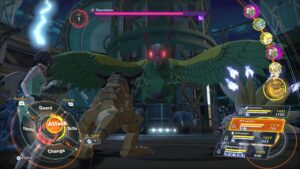
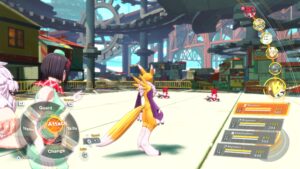
The combat system, based on a trio of Digimon, is tactical and effective, but has hardly evolved at all. The real disappointment comes, once again, from the game’s structure. Despite the promise of time travel, exploration boils down to dungeons that are, in the end, nothing more than a succession of soulless corridors and square rooms, simply dressed up with a different theme (prehistoric, futuristic…). This repetitive, uninspired level design is the biggest hindrance to immersion, and all too often transforms the adventure into a laborious “grind”.

A playable anime
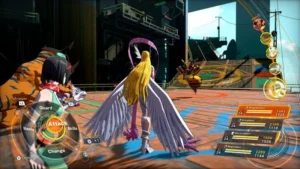
Visually, the game is a success. The cel-shaded style is mastered, and the Digimon models are magnificent, faithful and perfectly animated. It’s a pleasure to see your team come to life on screen. The soundtrack is also top-notch, with catchy electro-pop themes that fit the mood perfectly. On a technical level, the game is stable overall, even if there are a few framerate drops on Nintendo Switch when visual effects pile up on the screen (thanks to our subscriber who relayed the information to us)
Monstrous content
In this respect, the game is beyond reproach. Allow a good 50 hours to complete the main quest. But for collectors, the real adventure begins. With over 400 Digimon to scan, train and evolve, as well as numerous side quests and solid post-game content, the game will easily keep you busy for over a hundred hours.
Digimon Story: Time Stranger is a good game, driven by a compelling story and the most addictive collection/evolution loop in the genre. It’s a veritable feast for Digimon fans, who will be delighted to rediscover everything that made Cyber Sleuth so strong. However, the game suffers from a crying lack of innovation. Its dated game structure and repetitive dungeons prevent it from transcending itself and appealing to a wider audience. It’s a sequel in spirit, but more like a deluxe stand-alone than a genuine new opus.
Rating: 8/10
Views: 3