Review – Assassin’s Creed Black Flag Resynced
Get ready to hoist the black flag, because Ubisoft has just released the very first true remake of its flagship franchise with *Assassin’s Creed Black Flag Resynced*. Developed by the team at Ubisoft Singapore—which has put its painful but formative experience with Skull and Bones to good use—this title is billed as a “remakster”: a comfortable middle ground that enhances the presentation while retaining the core of the 2013 game.
The Caribbean has never felt so organic
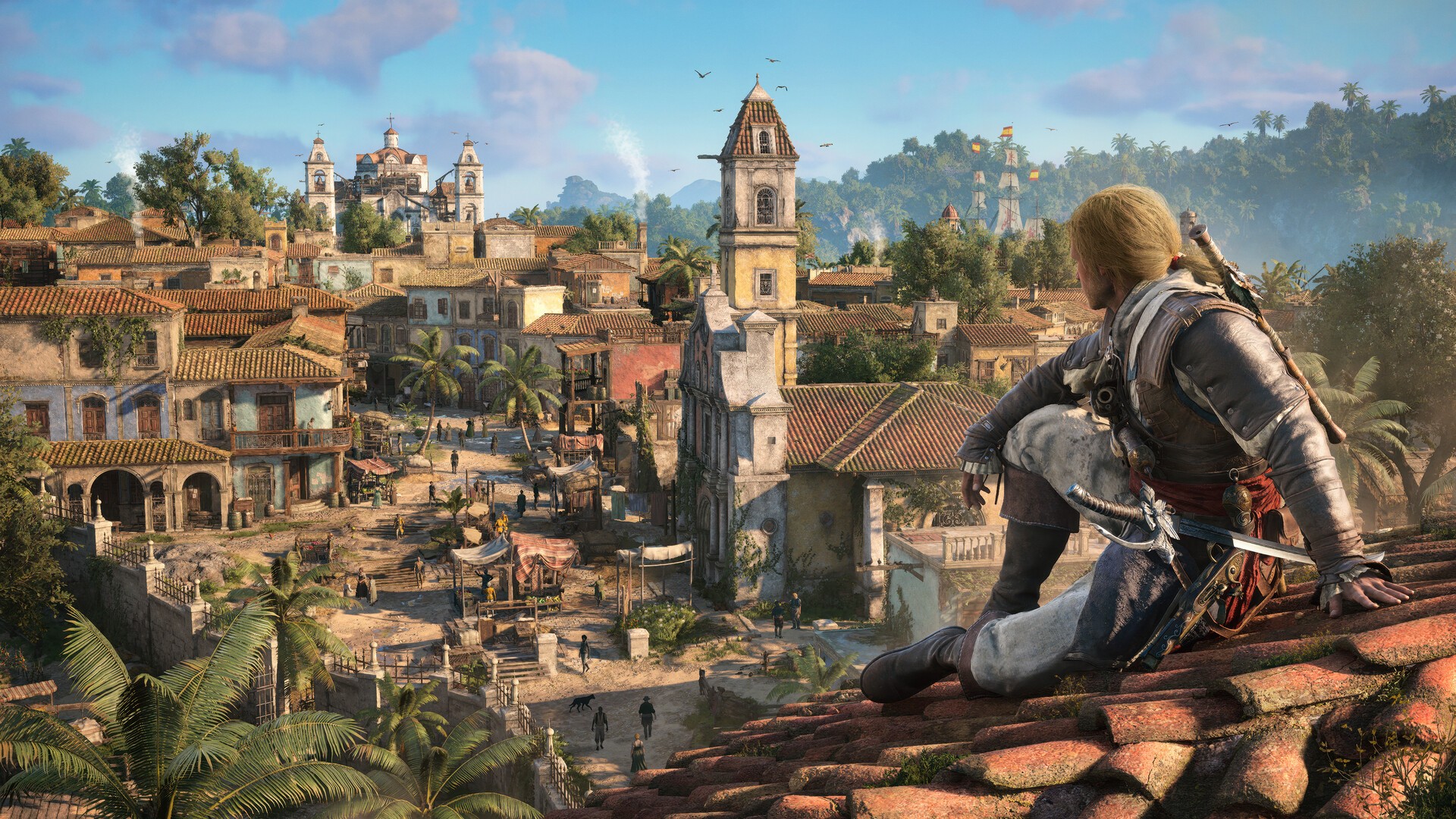
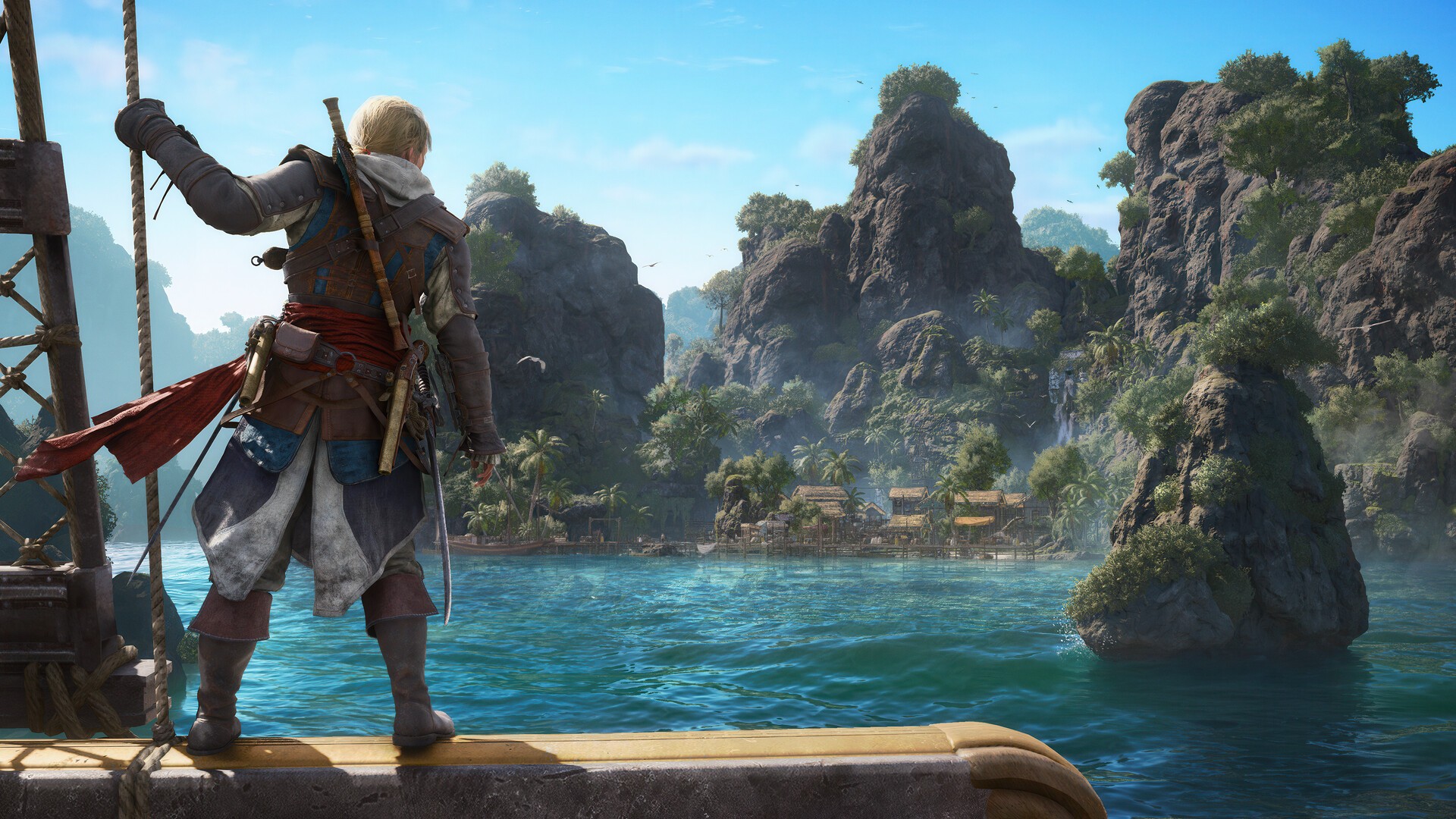
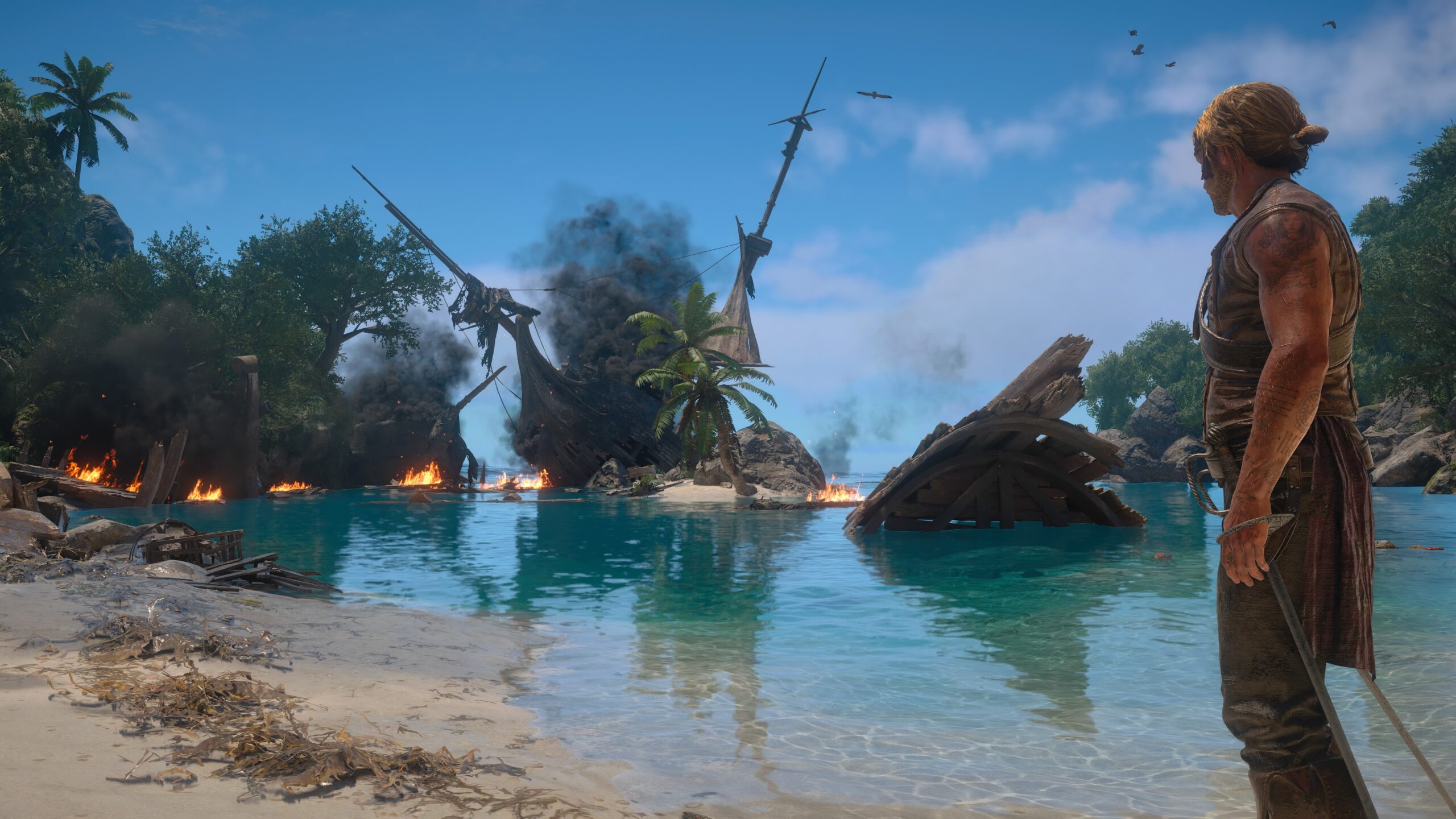
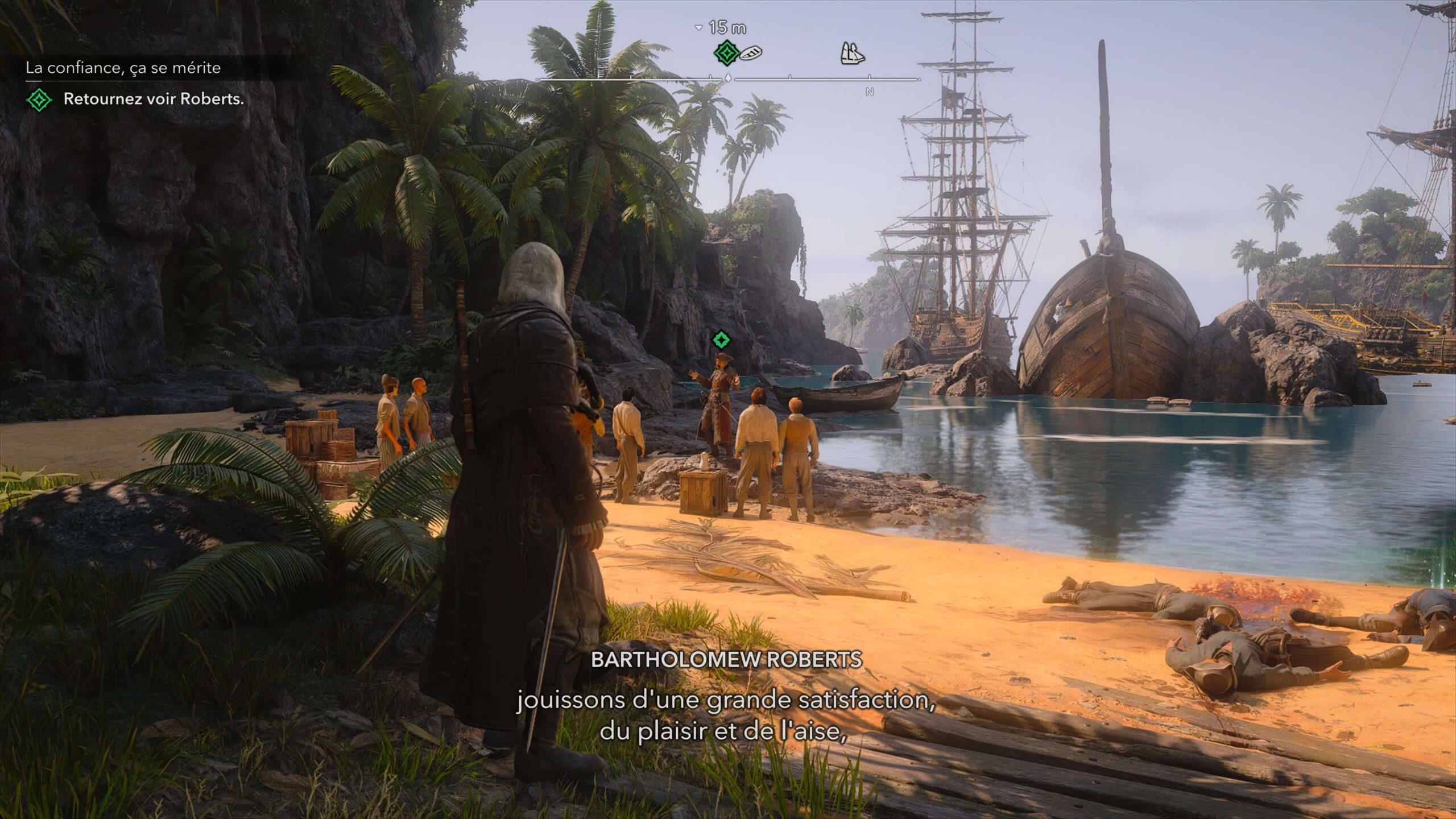
Visually, the game takes full advantage of the Anvil engine (the same one used in AC Shadows, released in 2025). The result is a monumental immersion experience: the islands are teeming with life, the colors are ultra-saturated and vibrant, and Havana and Nassau have never felt so organic. The icing on the cake: exploring between land, sea, and diving happens without any loading times. The reorchestrated sailors’ songs will stick in your head for weeks—guaranteed.
Dreadful weather… a bit too much of a good thing?
The physics of the swells and the water are incredible. Out at sea, the blue sky can turn in a matter of seconds into a hellish tropical storm with tornadoes and giant waves. It’s spectacular, but over time, it gets frustrating: the storms come around a little too often, darken the landscape, and force the Jackdaw to slow down. We would have loved to enjoy the tropical sun a little more!
PS5 Pro Technical Notes: While the game runs smoothly on the standard PS5 (aiming for a hybrid mode between 30 and 40 fps), the PS5 Pro fixes the major flaws in the base version. Third-party NPCs have rather dated-looking beards and hair on the standard PS5, while the Pro smooths out aliasing, refines shadows, and makes the protagonists’ faces much sharper and more consistent.
Stealth is top-notch, but combat is repetitive and the camera is a mess
As for gameplay, it’s a mixed bag. Fortunately, the game wisely skips the tedious present-day Abstergo sequences entirely in favor of four linear, optional “Animus Rifts” (à la Shadows) that explore visually stunning “what-if” alternate scenarios.
The Return of True Stealth
This is the game’s biggest strength in the real world: by borrowing new features from Mirage and Shadows, the game offers the best stealth in the series. You can finally crouch freely and manually adjust your hood. Clearing out a fort or plantation one after another with your tools before looting the chests is pure bliss, greatly aided by the 2013 vertical level design that’s perfectly suited for manual jumps and side-step maneuvers. Even tailing missions (the bane of the era) have been made more forgiving: getting spotted no longer results in a Game Over; you can simply kill the target to retrieve a note from their corpse.
Combat Is Too Simplistic
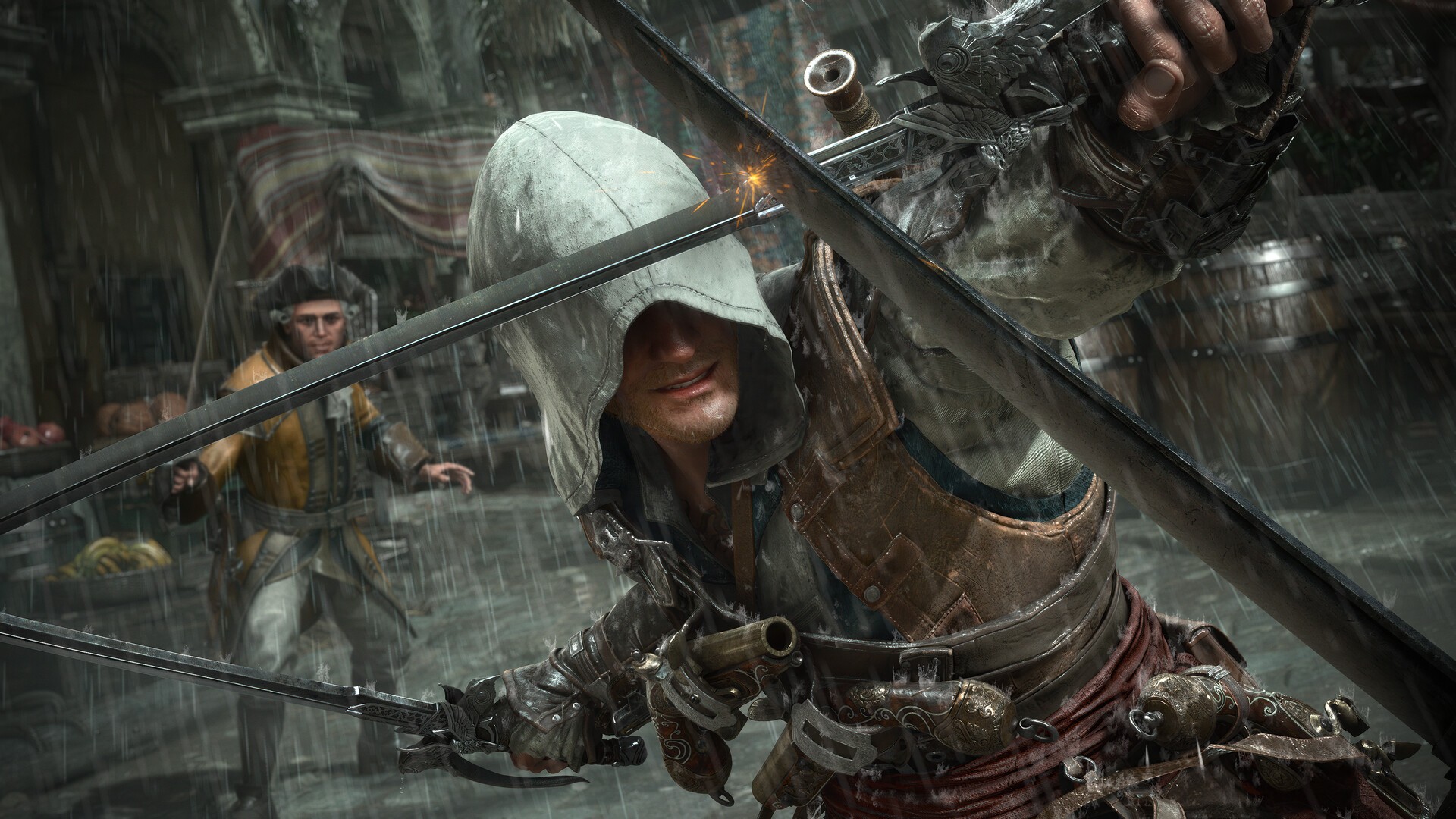
The combat system returns to a more tactical model based on a posture gauge. Timing a counterattack just right lets you break a guard in one go and launch into a series of satisfying finishing moves (complete with “This is Sparta!”-style kicks).
The problem? The arsenal has been drastically reduced. The hidden blades are no longer active weapons but simply contextual finishing moves, and you can’t pick up guns from the ground. You spend the entire game using your basic dual blades without feeling any real difference from the other blades. Worse yet: the lock-on camera is a nightmare. In confined spaces or during boarding sequences, as soon as a wall or an ally is behind you, it zooms in aggressively and throws off your sense of orientation, preventing you from seeing attacks coming from behind.
Edward Kenway: A Pirate Going in Circles
Story-wise, the game is a shot-for-shot copy of the 2013 cutscenes. While the supporting characters (Blackbeard, James Kidd) are still fantastic, Edward Kenway is showing his age in 2026. Obsessed with money, he doesn’t evolve and charges headlong into the same traps, even in the new quests. The developers have also left some plot holes unchanged (we still don’t know how the Templars figure out his identity at the beginning).
The game attempts to flesh out its content with new quests and three special officers to recruit (Lucy, El Padre, and Tobias). Their revenge missions are classic but fun, especially Lucy’s, which brings a real breath of fresh air and a defense bonus on the ship (Perfect Brace).
The big letdown: While the removal of multiplayer mode goes over smoothly, the absence of the excellent Freedom Cry DLC centered on Adéwalé is a huge disappointment. Adé is relegated to the role of a mere moral compass in the main story, and depriving him of his standalone adventure leaves a huge void.
An Overpowered Ship but a Slightly Empty World
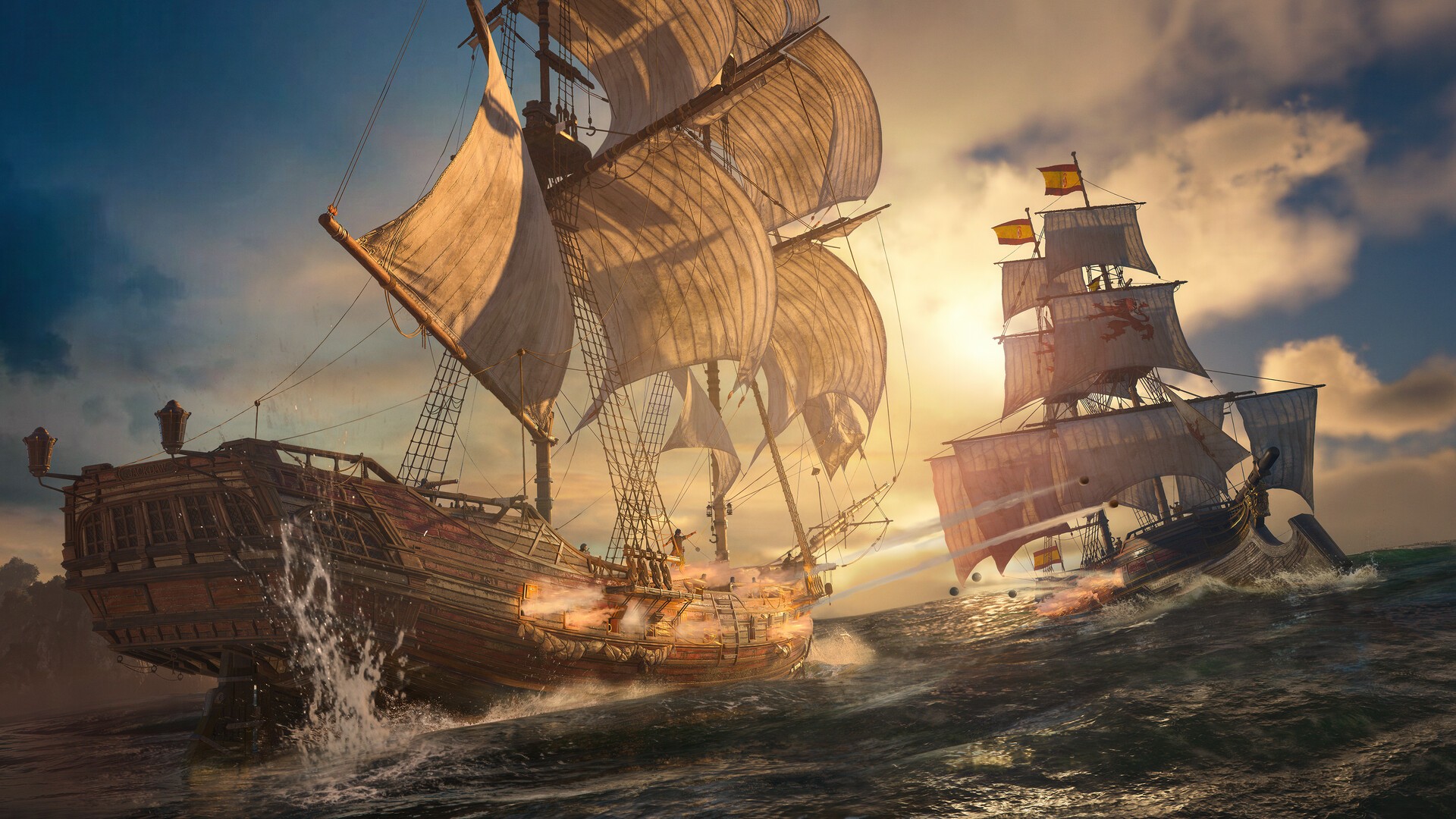
The naval battles are insanely intense, enhanced by cannon smoke and the ability to manually aim the swivel cannons. On the other hand, the Jackdaw is a money pit: all your gold will go toward the hull and ammunition just to keep from sinking in two broadsides.
World exploration, on the other hand, is disappointing. Ubisoft has unlocked small islands that were previously blocked off, but after 10 minutes of sailing against the wind, you’ll often find nothing more than a measly chest containing three planks and a couple of trinkets. The same goes for free diving: it’s beautiful, but outside the predefined zones, it’s pointless.
Finally, a word about hunting and harpooning: they’re mandatory for upgrading your life and your saddlebags (essential for 100% completion). While land-based skinning is hidden from view, whale and shark hunts at sea remain very gory, requiring you to riddle the animal with about ten harpoons before hauling its mutilated body out of the water. A classic mechanic that’s essential but brutal.
A nostalgic but dated remaster
Assassin’s Creed Black Flag Resynced successfully modernizes its visuals and offers a fully immersive and addictive pirate atmosphere. The return of in-depth stealth gameplay and the enhanced naval battles are a joy to experience. However, its repetitive combat, a camera that gets in the way during melee fights, and the unforgivable absence of the Freedom Cry DLC prevent it from earning a perfect score. It’s a superb nostalgic journey for veterans and a great gateway for newcomers, offering an excellent preview of what a future remake of Altaïr or Ezio might look like!