Review- MXGP 26: The Official Game
Two years after the monumental debacle that was MXGP 24, Lyon-based Artefacts Studio and publisher Nacon are hitting the gas again with MXGP 26: The Official Game (released on October 1, 2026).
Aware that they had disappointed fans, the studio took an extra year to rebuild everything from scratch: switching to Unreal Engine 5, completely overhauling the physics engine, and integrating dynamic terrain deformation. So, is this a triumphant comeback for the dirt track, or just a futile burst of speed?
The Shift to Unreal Engine 5: The Mud Finally Looks the Part
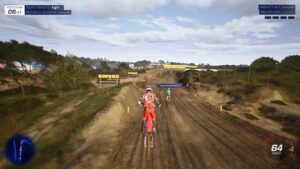
From the very first seconds, the generational leap compared to the 2024 installment is immediately apparent. Thanks to Unreal Engine 5, the 19 official tracks of the 2026 season are unrecognizable. The lighting effects are striking, the dirt kickups look realistic, and the rainy weather sets the stage for epic races where the bikes and riders end up literally caked in mud. Whether in first-person view or helmet-cam mode, the sense of speed and the closeness to your opponents deliver a serious adrenaline rush.
The major technical highlight: dynamic track deformation. This was the feature fans had been clamoring for for years: the track is no longer a static surface. As the laps go by and the 16 bikes repeatedly pass over it, deep ruts and grooves carve themselves into the dirt in real time. The ideal line on the first lap can turn into a treacherous quagmire by the fifth lap. This forces you to constantly adjust your lines, adding an essential tactical dimension to the spirit of motocross.
Be careful, however, with the presentation: while the track and the bikes are superb, the pre-race buildup remains hopelessly flat, the models of the mechanics and coaches look like they’re straight out of the PS2 era, and the spectators remain strangely silent along the barriers, somewhat dampening the electric atmosphere you’d expect from a real Grand Prix.

Demanding handling… but sometimes out of this world
Artefacts Studio has completely overhauled its physics to offer a dual-joystick model where one joystick controls the bike’s steering and the other controls the rider’s weight transfer (crucial for scrubbing and aerial control).
Once you’ve mastered the basics, traction is good, the sense of movement is there, and the learning curve proves particularly rewarding for purists who turn off the assists. On the other hand, the game is unforgiving toward newcomers:
-
No hands-on tutorial: The game throws you into the fray without explaining the finer points of weight transfer.
-
No rewind feature: Make a mistake in the last turn after 15 minutes of effort? You’re guaranteed to be back to square one.
-
Unpredictable physics: This is the major drawback of the handling. The bike sometimes tends to float excessively in the air during big jumps, and grazing a small speed bump or curb can catapult you off the track for no apparent reason. Collisions with track obstacles are rough, and trying to get back on the track after going off course sometimes feels like the controls are being artificially restricted.

The elephant in the paddock: Where’s the Career mode?
This is where the game falls seriously short, and it’s what prevents MXGP 26 from making it onto the podium. There is absolutely no story-driven Career mode.
For an official sports game in 2026, the lack of a “zero-to-hero” progression (starting at the bottom of the ladder in MX2 to climb to MXGP, negotiating contracts, managing sponsors, and building your team) is unthinkable. The content boils down to a series of unadorned races:
-
Grand Prix and Championship (racing through all 19 official tracks)
-
Time Trials (Time Attack)
-
The Complex (a free-roam training area you’ll quickly grow tired of)
-
Online multiplayer (up to 10 drivers, no split-screen in local mode)
The rider and bike editor is actually very well done, with a ton of official sponsors, licensed gear, and retro ’90s fonts to customize your jersey (even though the rider’s name is strangely limited to 12 characters). But unlocking all this gear via tickets loses all its appeal without a real career mode to help your team shine.
Another disappointment: while the men’s roster is complete (featuring Romain Febvre, Maxime Renaut, Jeffrey Herlings, and Liam Everts), female riders are still completely absent, even though the WMX women’s championship has existed for over two decades.

A solid foundation for a house without a roof
MXGP 26: The Official Game largely succeeds in its technical redemption. The switch to Unreal Engine 5, the dynamic ruts that alter the track layout, and the more refined riding physics prove that Artefacts Studio has finally understood what motorcycle enthusiasts want. Unfortunately, by sacrificing the Career mode in the name of technical overhaul and allowing for physics that are sometimes downright bizarre, the game feels more like a brilliant, full-scale technical demo than a complete racing game. Fans of raw, unadulterated riding will find plenty to shave off their lap times, but those seeking long-term immersion would be wise to wait for the next installment.