Review – The Sinking City 2
Put on your sticky raincoat, screw your fedora onto your head, and load your gun. After a first installment released in 2019 that was brimming with ambition but got lost in an open world that was too vast and gameplay that was often clunky, the Ukrainian developers at Frogwares (based in Kyiv) are back with *The Sinking City 2* (available since mid-August 2026 on PC, PS5, and Xbox Series).
For this sequel, the studio made a radical choice: to ditch the open-ended investigation and fully embrace pure, third-person survival horror. It’s simple: after 15 minutes with the controller in hand, the conclusion is obvious—what we’re seeing is a true Lovecraftian version of Resident Evil set in the 1920s.
I roamed the flooded alleyways and putrid corridors of Arkham for about a dozen hours. Here’s my full review!
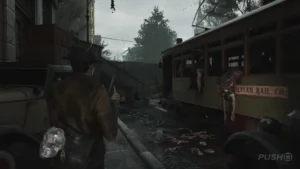
A Dive into the Mythos: Welcome to Arkham, 1929
Forget Oakmont and Detective Charles Reed from the first game: the game makes a clean break from the past (aside from a few Easter eggs). You play as Calvin Rafferty, an occultist with the look of a pulp fiction hero—square jaw, brave to the point of recklessness, but very endearing.
After a disastrous expedition to the Dreamlands (the realm so dear to Lovecraft), his partner in life and the occult, Faye Bennett, falls into a supernatural coma. Cal then arrives in Arkham, Massachusetts, in 1929, just as a cataclysmic flood ravages the city and the evacuation is nearly complete. To rouse Faye from her slumber, Calvin must plunge into the depths of a sunken city where the dead do not remain quietly at the bottom of the water.
Fortunately, the plot avoids the trap of abstruse metaphysics that would force you to watch an explanatory video on YouTube once the credits roll. The story remains straightforward and gripping, sprinkled with cameos and delightful nods for fans of the Cthulhu mythos. The writing also subtly reflects the developers’ experience of the war in Ukraine, particularly during a especially poignant scene in a hospital.
A Diligent Student of Resident Evil: Gameplay and Feel
Frogwares makes no secret of it: the structure draws direct inspiration from Capcom’s recent remakes (led byResident Evil 2 ), with touches of Silent Hill and Dead Space:
-
The over-the-shoulder camera and the tension: The view is tight, shooting is much more responsive and precise than in the first game, and Cal can now dodge and crush monsters on the ground with a heavy heel strike. The only minor drawback: the lack of a quick 180-degree turn button.
-
Grid-based inventory management: Your pockets are tiny. Weapons, herbs, chemicals, and even a fish-shaped key take up precious slots. You have to combine herbs and fluids to craft healing items or bullets, forcing you to make tough choices between survival and ammunition.
-
Safe Rooms: You save on record players (gramophones), store your surplus items in a magic chest, and spend your upgrade points to boost your damage or reload speed.
-
The Color-Coded Map: Taken directly from RE2 Remake, it highlights rooms with remaining items to search in red and switches to blue once the area has been cleared. A delight for compulsive explorers.
-
Old-school puzzles: Find three medallions to open a portcullis, track down themed keys, or align strange mechanisms.
What happened to the detective aspect? The famous “Mind Palace” has been simplified into an investigation board where you connect clues found in notes using red threads, much like a conspiracy board. By connecting the right clues, you unlock safe codes or hidden treasures that reward you with upgrade points. It’s not very difficult (especially since the clues share obvious visual symbols), but it cleverly rewards players for reading and exploring the environments.
The Nightmare of the Worms: Unpredictable Enemies
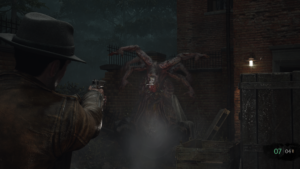
Gone is the simple sanity meter from the first game. Here, the threat takes the form of The Slither—repulsive hybrid creatures, part slug and part eel, that slither into human corpses to reanimate them as murderous puppets.
Forget traditional headshots:
-
The creatures’ weak spots are boils and pustules that appear randomly on different parts of their bodies (arms, torso, thighs). So you have to watch their movements and wait for an opening instead of emptying your magazine into their skulls.
-
When a host collapses, the worms burst out and rush toward another corpse on the ground to revive it! You absolutely must crush the worms with powerful kicks before they multiply. Battles sometimes descend into pure panic and get your heart rate soaring well above the genre average.
The pitfall of boss fights: While the atmosphere and resource management work wonders in the corridors, the game stumbles in its enclosed arenas and boss battles. To prevent players from getting stuck out of ammo, Frogwares has ammo crates respawn endlessly in these areas. The result: these battles lose all sense of survival tension and turn into simple, somewhat dull shooting galore.

A gritty art style powered by Unreal Engine 5
Arkham is a masterpiece of decay. Built on Unreal Engine 5, the game impresses with its work on damp textures, oppressive fog, and the density of detail in every dilapidated room:
-
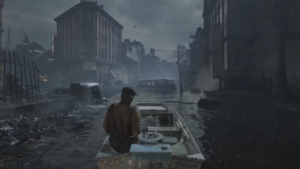
Chapter 1 has you navigating by boat through flooded avenues to reach a haunted hotel (it’s a shame, by the way, that the boat disappears completely after this first area).
-
Chapter 2 takes place in a terrifying psychiatric hospital, where you’re pursued by an invincible monster worthy of Mr. X or Nemesis.
-
Chapter 3 drags you through Arkham’s fish market for an oil spill-like atmosphere and pure Lovecraftian gills.
The soundtrack and sound design are exemplary, constantly keeping you on edge at the slightest creak of a floorboard or gurgle of mucus. On the technical side, while the scenery is stunning, there are a few limitations: faces and facial animations lack a bit of naturalism, some object and room models are reused, and frame rate drops occur occasionally during very action-packed scenes.

The Lovecraftian Resident Evil We’d Given Up on
The Sinking City 2 pulls off a spectacular transformation. By shedding the clunkiness of its former open world to focus on a linear, oppressive adventure calibrated to the standards of modern survival-horror heavyweights, Frogwares has delivered its best game to date. While its narrative runs a bit out of steam toward the end and its bosses lack bite, its sticky atmosphere, its meticulous ammunition management, and the visceral terror of its monsters make it a must-play for all Resident Evil fans and lovers of cosmic horror.