Review – Castlevania: Belmont’s Curse: A Legacy Betrayed by Clumsy Execution
Verdict Lev3lup : 7/10
—
# Introduction: When the Ghost of the Past Haunts Paris
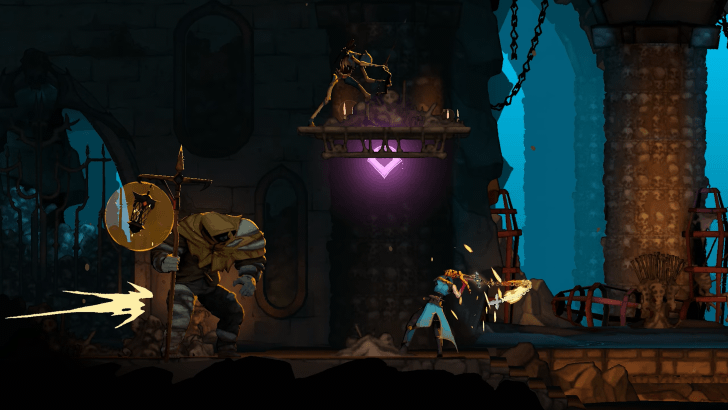
The world of Castlevania has always been defined by a particular tension between free exploration and the rigour of traps. In Castlevania: Belmont’s Curse, Evil Empire attempts to revive this magic by plunging us into a devastated Paris of 1499, under Dracula’s seal. The protagonist is Rose Belmont, a courageous heir from a prestigious lineage, whose power resides in a subtle play with playing cards and captured souls. The basic idea is appealing: a classic Metroidvania where every wall hides a secret, every shadow harbours an enemy, and the world map opens up gradually like a memory of a universe.
However, behind this enchanting gothic aesthetic lies a darker reality. While the game possesses the soul of the series’ great classics, its technical execution leaves much to be desired, transforming what should be an odyssey into a constant battle against its own mechanics.
Gameplay & Getting Started: A Clumsy Dance
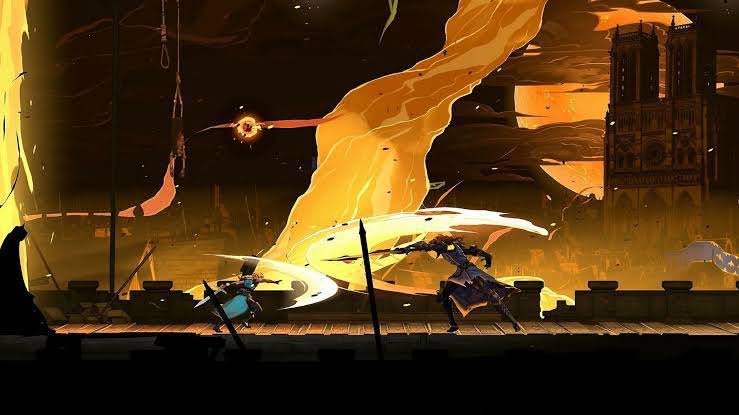
The heart of the game rests on mastering Rose and her whip. The concept is simple but demanding: you must use your whip to attack, propel yourself, or interact with the environment. On paper, it’s a dynamic system that should offer fluidity comparable to the best titles in the genre.
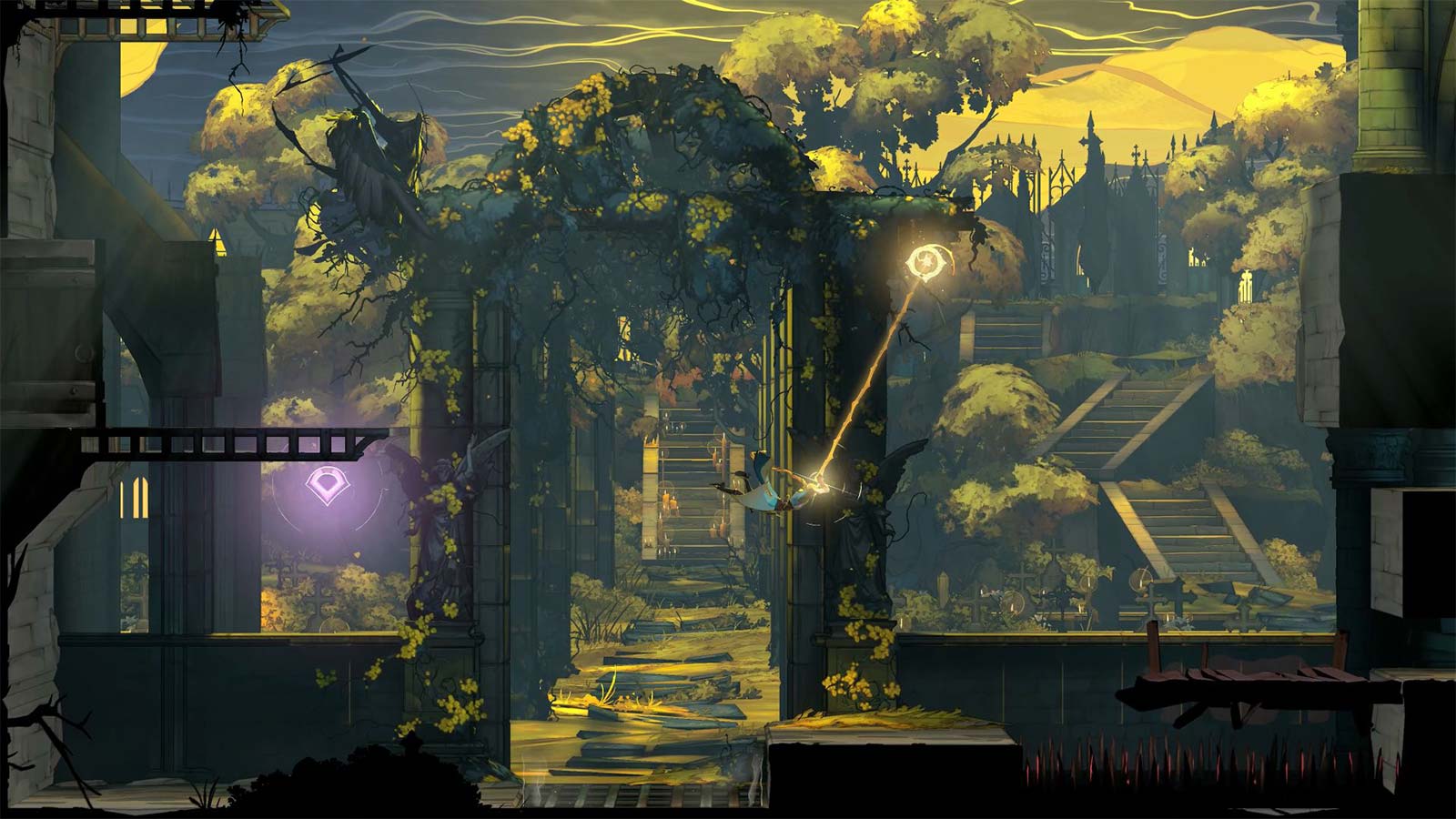
In practice, the situation is quite different. Rose’s controls are often described as “digital” while the world around her seems to live on a fluid plane. Attacks and movements are sometimes limited to strict directions (up, down, left, right), creating constant friction with an environment that moves organically. Getting stuck between an enemy and its shield, or seeing your whip miss its target by a fraction of a second only to be sent back to the previous checkpoint, is a major source of frustration. The game seems to defy you without valid reason, turning ingenious platforming segments into painful exercises where one fights against the engine rather than Dracula.
Art Direction & Technical: A Ruined Paris on Fragile Foundations
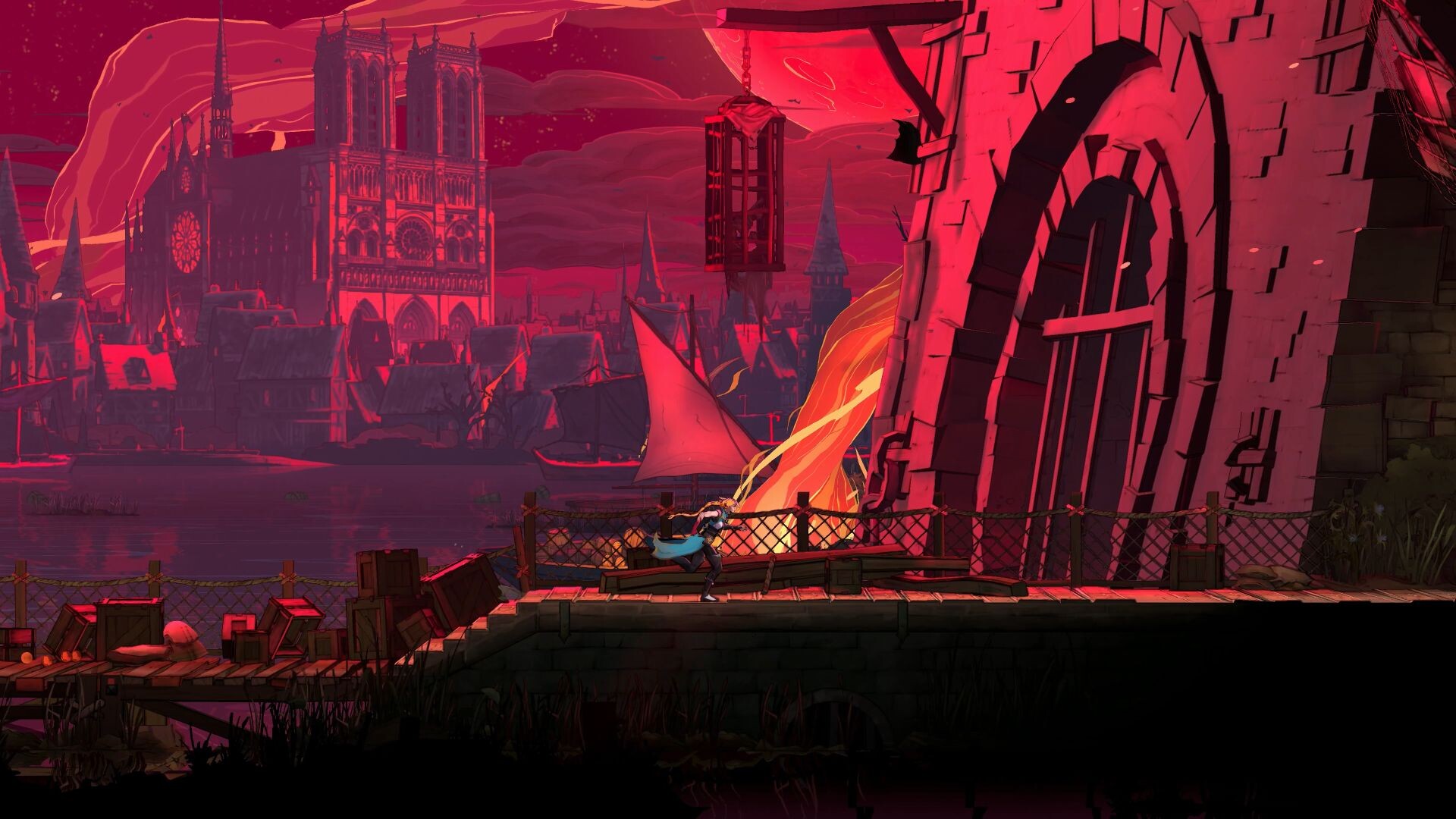
Visually, Belmont’s Curse succeeds in capturing the atmosphere of a ghostly medieval Paris. The settings, blending gothic architecture and supernatural elements, are detailed and immersive. The music, especially in sequences located under Notre-Dame Cathedral, adds a layer of mystery that works perfectly with exploration.
However, this visual beauty is constantly threatened by glaring technical issues. The game suffers from framerate instability, even on powerful consoles like the PS5 Pro. These performance drops are not trivial: they cause loss of precious time and, worse still, premature deaths due to control imprecision exacerbated by lag. The technical aspect is not just an aesthetic issue; it directly impacts playability and breaks the immersion that so much effort was deployed to create.
Soundtrack & Atmosphere: A Stunning Gothic Ambience
The soundtrack of Belmont’s Curse is undoubtedly one of the title’s strong points. It perfectly evokes the melancholy and tension of a ruined 15th-century Paris. Musical themes adapt well to different zones, moving from the dark corridors of Dracula’s castle to the cobblestone streets of the capital.
The general atmosphere is that of a classic revisited with respect. Rose’s story, her struggle against her destiny and the curses of her lineage, are carried by a narration that pays homage to over 500 years of Castlevania history. Unfortunately, this enchanting atmosphere is often ruined by frustrating environmental interactions, such as complicated access to teleportation points or the unexplained removal of the map in the most complex areas, which turns exploration into an exasperating chore.
Lifespan & Content: A Too Short and Painful Walk
Although the game offers a decent lifespan for a niche title, the experience is often marred by frustrating progression mechanics. The save system and quick return to points of interest are designed clumsily, forcing the player to perform repetitive and tedious tasks.
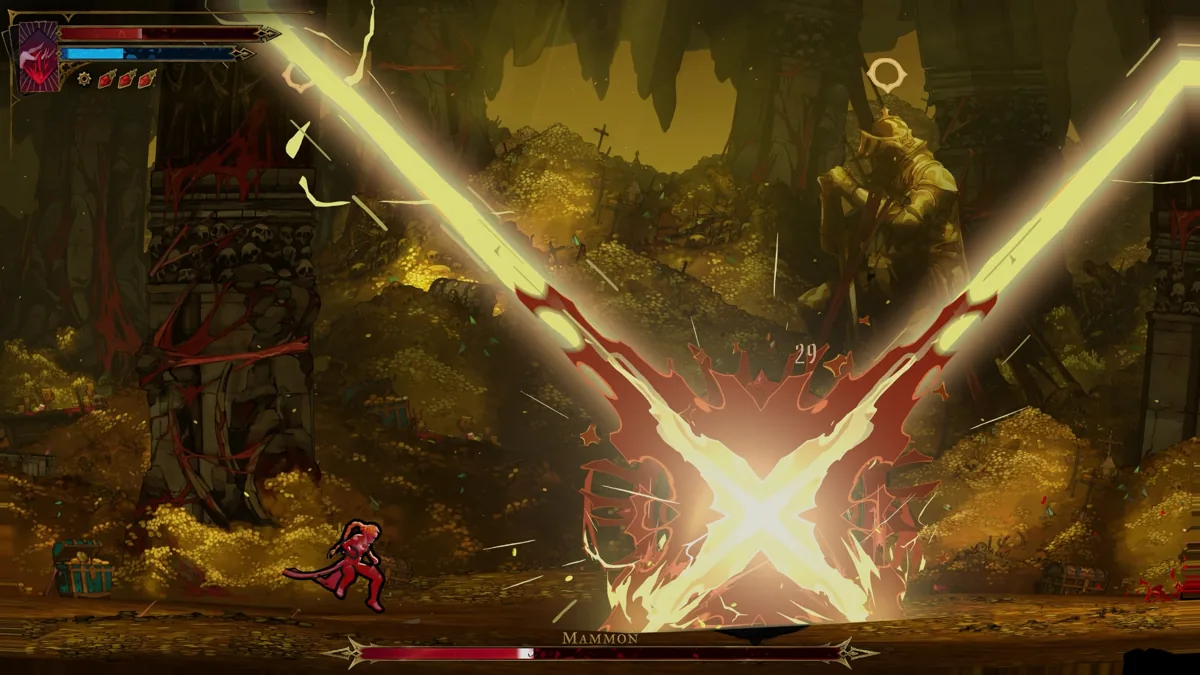
Boss fights perfectly illustrate this imbalance between design and execution. Some encounters are smart mechanical gauntlets that test reflexes, while others seem over-dimensioned, trying to do too much and ending up appearing unbalanced. In a difficult fight against an enemy like “Death”, a simple placement error or a slipping whip is enough to kill you, making stat upgrades or weapon choice almost ineffective against the required precision.
The Strengths
- **Atmosphere and Art Direction**: The gothic interpretation of medieval Paris is magnificent and very immersive.
- **Inspired Level Design**: Many mechanics, such as connected mirrors or music in the cathedral, are brilliant ideas.
- **Homage to the Series**: The game pays a vibrant homage to Castlevania’s legacy and Metroidvania classics.
The Weaknesses
- **Sluggish and Imprecise Controls**: Whipping direction is often unfair and difficult to master, especially with framerate drops.
- **Persistent Technical Issues**: Game instability on PS5 Pro indicates insufficient optimisation.
- **Frustrating Progression System**: Teleportation and area access mechanics are often poorly designed and penalise the player.
Verdict
Castlevania: Belmont’s Curse is a title that starts with commendable ambition but betrays its potential too often. It is a work inspired by great ideas, such as exploring a ghostly Paris, but condemned by dubious execution. Clumsy controls and technical issues transform what should be a magical experience into an exhausting battle against the game itself. If you are a Metroidvania purist ready to accept unfair challenges, you might find your account here, but most players will be frustrated by the overall experience. It is a beautiful idea that failed to be executed with the necessary rigour.
Rating: 7/10
—