Review – Razer Blackshark v3 Pro
If you’ve been following Lev3lup’s updates, you know I love Razer gear. Two years after the excellent V2 Pro (my old go-to), the three-headed snake brand is back at it with the Razer BlackShark V3 Pro (released in late 2025).
I’ve had it strapped to my ears for several weeks now, especially while playing Battlefield 6, COD, and more. So, is it an absolute game-changer or just a timid update? I’ll tell you everything in this comprehensive review. And spoiler alert: I loved this headset, even if it’s not technically perfect!
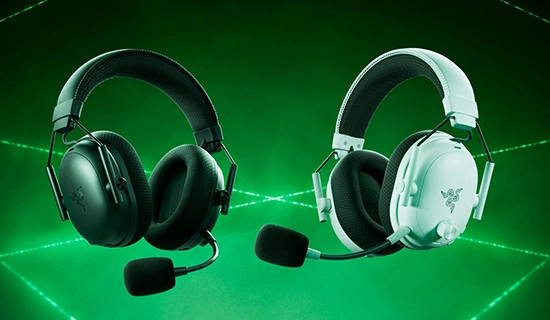
First Impressions and Design: The “Aviator” Look Is Still Classy
Aesthetically, you don’t change a winning formula. We see that signature “helicopter pilot/aviator” look that gives the line its charm, with oval ear cups suspended from thin metal headbands. It’s sturdy, super stable, and doesn’t budge. Still no RGB (Chroma) lights in sight, and frankly, for a “Pro/Esports” positioning, it makes much more sense this way.
On the other hand, a surprise on the scale: the headset now weighs 367g, a weight gain of nearly 50 grams compared to the V2 Pro. So yes, the build has gotten heavier, but the comfort remains top-notch. The memory foam ear cups are covered in breathable FlowKnit fabric: it’s ultra-breathable and prevents sweating, even during intense sessions.
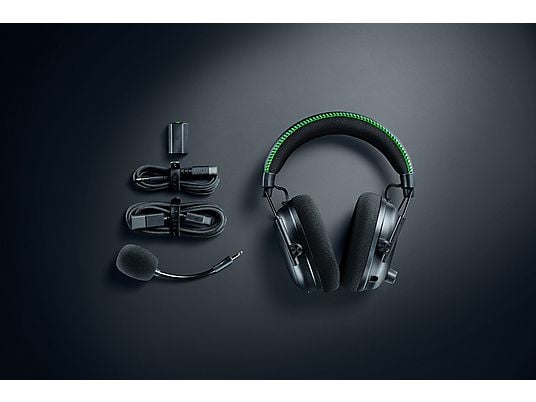
If you have a large head, it’s often a real struggle to find a headset that doesn’t crush your skull after two hours. Razer has finally fixed that. The headband is super flexible, the side pressure is perfectly balanced, and—a major new feature—the ear cups finally fold flat! A real joy when you hang it around your neck. Be careful, though: those with smaller heads might feel a slight slippage due to the added weight.
The ports are cleverly arranged:
On the left: Removable mic jack, USB-C port, mic volume button, Mute button, and On/Off button.
On the right: Master volume wheel, ANC switch, and pairing/source button.
Sound Performance: The Bio-Cellulose Game-Changer
Under the hood, Razer has replaced the old titanium drivers with 50mm Razer TriForce Bio-Cellulose (Gen-2) drivers. The result? In-game audio is crystal clear. Harmonic distortion has been reduced, and the bass has gained depth without overwhelming the rest of the sound. It’s tailor-made for gaming: you can hear every footstep or reload sound with incredible precision. For movies or music, you’ll just need to tweak the app’s equalizers to tone down the bass a bit.
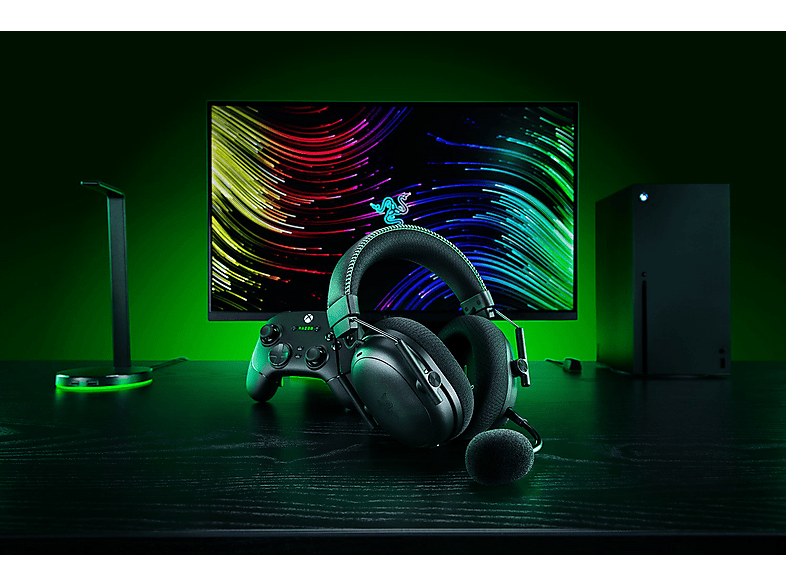
On PC (Windows 11), installing via Razer Synapse unlocks the headset’s full potential: you can choose between the immersive THX Spatial Audio experience and classic Stereo mode, which includes preset “Esports” profiles for the biggest games on the competitive scene. If you’re playing on a console (Xbox or PS5 depending on the version you bought), don’t panic—the Razer Audio mobile app lets you adjust everything from your couch.
Invisible latency (10ms)
This is the major technical feat. Using the 2nd-generation HyperSpeed Wireless dongle, wireless latency drops below 10 ms (compared to 15–30 ms for the competition). In-game, it’s simple: the lag is completely imperceptible. It’s instantaneous, responsive, and ideal for competitive gaming.
A competition-grade microphone (48 kHz)
If there’s one thing everyone agrees on about this V3 Pro, it’s its detachable Razer HyperClear Full Band microphone. The capsule size increases from 9mm to 12mm, but more importantly, the sampling rate jumps to 48 kHz (compared to 32 kHz on the V2 Pro).

The clarity of the voice is stunning. The passive noise cancellation (with the windscreen) and software processing via Synapse work wonders. I’ve done gaming sessions and video meetings with an air conditioner blasting in the room: the people I was talking to could hear me perfectly, without any background noise. Its flexible metal stem allows for millimeter-precise positioning. My only minor personal regret? That it’s detachable rather than retractable/hidden in the earcup like on other models from the brand, but that’s a minor detail.
The Sticking Points: ANC and Real-World Battery Life
This is where we get to the “not-so-great” side of the tech, though it doesn’t spoil the overall experience.
ANC (Active Noise Cancellation): More of a Gimmick Than Anything Else
This is the big new feature on paper: the integration of active noise cancellation thanks to four microphones hidden in the chassis (which work even without the microphone boom). I might as well tell you right away, we’re a long way from industry leaders like Bose or Samsung. Razer’s ANC is lackluster. Combined with the excellent passive noise isolation of the ear cushions, it helps a little with blocking out continuous noise, but it’s clearly not the “game changer” we were expecting.
Battery Life: Use in Moderation
Razer promises up to 70 hours on PC (and 48 hours on console). That’s true, but only under ideal conditions: moderate volume, without ANC, and without ultra-low latency mode. If you’re like me—meaning you make full use of the features (10ms latency enabled, ANC on and off, and simultaneous dual Bluetooth 5.3 connections to take calls or check texts on your phone while gaming)— the battery life is easily cut in half.
Fortunately, the headset works via a USB cable (even if that disables ultra-low latency) and features a lifesaving quick-charge feature: 15 minutes of charging provides about 6 hours of battery life.
Conclusion: The new king of the office?
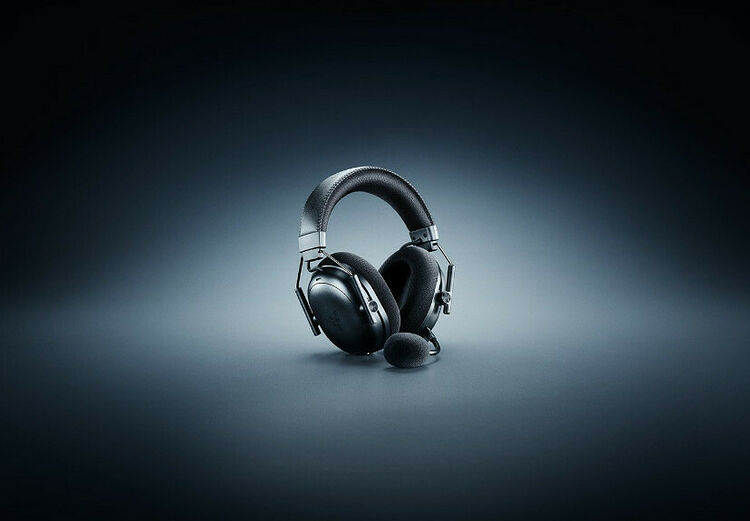
Despite slightly underwhelming ANC technology and battery life that melts away before your eyes if you enable all the features, the Razer BlackShark V3 Pro is an absolute banger. Razer has managed to address comfort issues for those with larger heads thanks to the swivel ear cups, while delivering top-notch audio and mic performance (the 10ms latency and 48 kHz mic combo is a game-changer for esports). If you have the budget, it’s a premium investment you won’t regret.