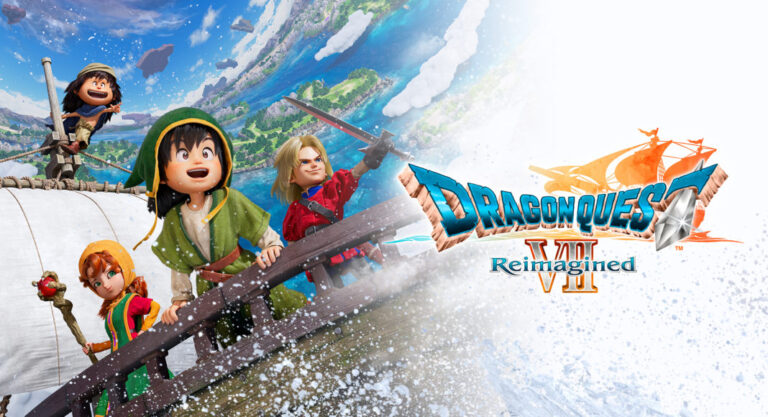
Today, we’re tackling a monument, a mountain of J-RPG that many feared to climb at the time: Dragon Quest VII. Initially known for its titanic length and snail’s pace, it’s back under the name Dragon Quest VII Reimagined.
I’ve spent the last few weeks piecing together the past, and I can tell you that Square Enix has not done things by halves. Is it still the 100-hour marathon we knew, or a modernized walk in the park? Get out your stone tablets, we’ll debrief it right now.
A finally fluid temporal puzzle
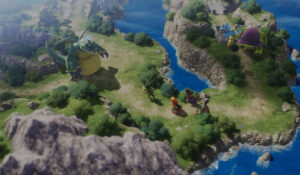
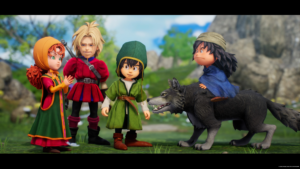
The adventure begins on Estard Island, the only piece of land emerging from an endless ocean. You play as the son of a fisherman who, accompanied by Prince Kiefer and the fiery Maribel, discovers that the world was once much larger. To restore it, you must travel back in time using mysterious tablets and resolve the tragedies of each island.
The great strength of this “Reimagined” version is its pace. The prologue, which used to be interminable, has been cleverly pruned. You get to the heart of the matter much faster, and the new scenarios about the protagonists’ childhoods add a welcome emotional depth. Admittedly, some islands have disappeared or become optional, but the core of the story gains in punch what it loses in superfluous details.
Moonlighting is a game changer
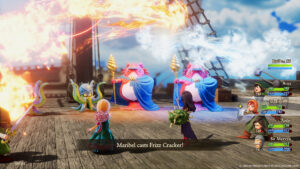
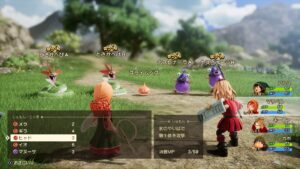
While combat remains faithfully turn-based, the mechanics have been given a major update. The big new feature is the Moonlighting system (the accumulation of vocations). Gone are the days when you felt vulnerable when changing jobs; you can now equip two vocations simultaneously, combining the spells of a Priest with the brute force of a Warrior.
Another major addition is the “Let Loose” abilities, reminiscent of the state of grace in DQ XI. These allow you to unleash devastating attacks or life-saving buffs when the tension rises. And for those in a hurry, the ability to defeat weak enemies directly on the map without going through the battle screen is a pure joy for exploration. The game is generally more accessible (free healing when leveling up), which will delight newcomers but may raise eyebrows among purists in search of suffering.
A sublime “Diorama” aesthetic
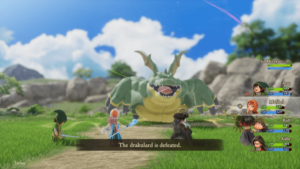
Visually, it’s absolutely enchanting. Square Enix has opted for a completely unique “Diorama” style, using scans of real handcrafted figurines for the characters and monsters. It feels like you’re moving through a living model, a miniature world of incredible precision thanks to Unreal Engine 5.
The environments are teeming with detail, from the reflections on the cobblestones of Silvermoon to the textures of the foliage. It’s colorful, warm, and incredibly charming. Seeing a Gluant with this “real material” texture gives it a presence it never had before. For me, this is the most beautiful artistic direction of the series to date.
Symphony for a lost world
On the sound side, we’re in for the usual excellence. The fully orchestral soundtrack gives an epic dimension to each island discovery. Koichi Sugiyama’s themes have never sounded better, although given the length of the game, some of the town music loops can end up sticking in your head a little too much.
The full voice acting (in English or Japanese) breathes incredible life into the dialogues. Maribel is more unbearable—and therefore endearing—than ever, and the regional accents add that touch of “flavor” typical of the French translation of Dragon Quest.
Conclusion: The ultimate J-RPG, 2026 version
Dragon Quest VII Reimagined achieves the impossible: transforming a game known for being indigestible into a modern, fluid, and visually stunning adventure. While it’s regrettable that certain content has been removed, such as the Casino and a few side quests, in order to speed up the game (the main story has been reduced from 100 hours to around 55), the end result is much more digestible. It’s the perfect tribute to a classic, enhanced by an artistic direction that will go down in history.
Rating: 8.5/10
Views: 5