After two “One’s Justice” episodes that laid solid but sometimes slightly rigid foundations, Bandai Namco returns with a proposal that aims to embrace Horikoshi’s entire body of work. Is this simply a “Plus Ultra” or a true revolution in arena fighting games? I activated One For All at 100% to give you the answer.
The twilight of heroes
This is undoubtedly the point that will thrill fans. All’s Justice doesn’t bother with preliminaries and plunges us straight into the final arcs of the anime: the Liberation War and the titanic final confrontation.
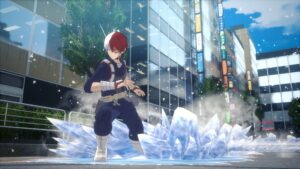
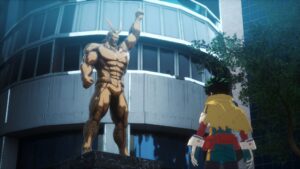
The story mode is treated with impressive cinematic care. It’s no longer just a series of battles with still images; the real-time cutscenes are superb and perfectly capture the emotion of key moments. Playing as a “Dark” Deku wandering the streets of Musutafu or experiencing the heartbreaking duel between the Todoroki families brings a dramatic intensity that previous installments barely touched upon. It’s epic, it’s poignant, and it concludes the saga in the most beautiful way possible.
Goodbye rigidity
The biggest criticism of the previous titles was that they felt a little “floaty.” Here, the developers have revamped the physics. The combat system is much more responsive and “grounded.”
-
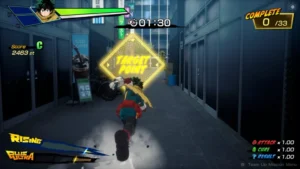
Quirk-Chain system: You can now cancel certain attacks to link them to support Alters in a much more fluid way. This allows for some pretty crazy aerial combos that are almost reminiscent of Marvel vs. Capcom in 3D.
-
Area destruction: The arenas are now almost entirely destructible. Sending Shigaraki through three buildings that collapse in real time gives you a thrilling feeling of power.
-
The roster: With over 60 characters (including the “Final War” versions of Class 1-A), there’s plenty to do. Each hero has been reworked to have truly unique gameplay.
It’s accessible for newbies, but managing the timing of counters and energy bars offers welcome depth for those who want to try their hand at online ranked mode.
The Cell-Shading explosion
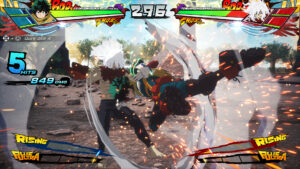
Visually, you can tell that the transition to the new generation of consoles has done the game good. The cell-shading is incredibly refined, closer than ever to the look of anime, or even manga panels during special attacks.
Particle effects (Deku’s lightning bolts, Endeavor’s flames, and Shoto’s ice) fill the screen without ever detracting from the action. The characters’ facial expressions have also been greatly improved, enhancing the immersion during the “Plus Ultra” close-ups. It’s clean, colorful, and runs at a steady 60 FPS, which is essential for a game of this type.
Thrills guaranteed
When it comes to sound, you don’t change a winning team. The iconic themes from the series are back, reorchestrated to match the darker atmosphere of this installment. The impacts are heavy, the explosions deafening, and the original Japanese dubbing is, as always, absolutely spot on. Hearing Bakugo’s voice screaming through the speakers as he unleashes his ultimate attack is enough to give you an adrenaline rush.

The ultimate tribute to Deku and his gang
My Hero Academia: All’s Justice is, without a doubt, the best game in the franchise. More beautiful, more complete, and above all much more fun to play, it corrects almost all the flaws of its predecessors. While the single-player mode may seem a little prescriptive and some supporting characters could be a little better balanced, the game is thoroughly enjoyable. It’s the game fans have been waiting for to say goodbye to their favorite heroes.

Rating: 8.5/10
Views: 3