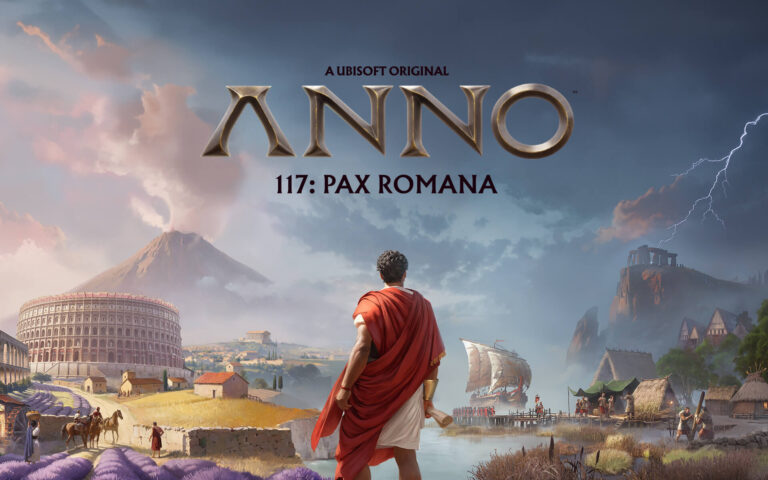
It was a risky gamble. To leave behind the complex production lines and steel of the Industrial Revolution and return to an era of marble, aqueducts and legions. Anno 117: Pax Romana arrives with the daunting task of proving that the series’ magic formula can be adapted to Antiquity. The result is a triumph. It’s the most accessible, beautiful and intelligent episode of the series in years, a game that will make you lose all sense of time. Hail Imperator, builders.
Become the Governor of Rome
For the first time in an Anno game, you’re not an anonymous pioneer. You take on the role of a Roman Governor, with the choice of loyally serving the Empire or governing your province with a more… independent hand. This new narrative approach is a success. It gives a clearer context and purpose to your actions. The Emperor Trajan is watching you, emissaries send you requests, and your development choices (favoring trade or the army, appeasing the gods or the citizens) have a direct impact on your relations with Rome and local peoples, such as the Bretons or Celts.
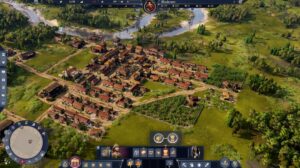
The Anno formula, sublimated by Rome
The core of the game remains unchanged: it’s a city-builder and economic management simulation of abysmal depth. You start with a small forum and a few plebeians, and end up with a sprawling metropolis, majestic aqueducts and roaring Coliseums. The gameplay loop is as diabolically addictive as ever: citizens need pottery, which requires clay, which requires a trade route, which requires a port…
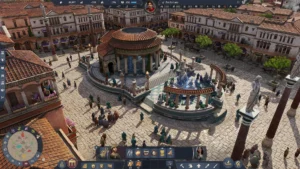
The great innovation of this opus is the management of the Pax Romana (Roman Peace). It’s no longer just a question of making your citizens happy, but of maintaining order and loyalty. Unhappy citizens or unsafe trade routes can attract barbarians. You must then choose: raise a legion to crush them, or use diplomacy and trade to pacify them? This new strategic layer, which coherently blends management, diplomacy and the military (at last!), is a real bonus.
The game is also the most accessible in the series. The interface has been completely redesigned, making it clearer and more logical. You can understand at a glance why your wine production has ground to a halt, without having to wade through obscure menus.
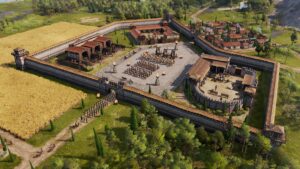
Antiquity as you’ve never seen it before
It’s simple: the game is sumptuous. It’s without doubt the most beautiful city-builder ever created. Watching the sun rise over the red-tiled roofs of your city, observing the construction of an aqueduct stone by stone or zooming in at street level to see your citizens strolling through the thermal baths… It’s a constant spectacle. The Roman aesthetic, with its white marble and Mediterranean vegetation, is pure pleasure for the eyes.

The Symphony of the Empire
The soundscape matches the artistic direction. The orchestral music is majestic, epic during the construction of a marvel, but also softer and more pastoral during phases of calm management. The sound design is excellent, from the sound of hammers on the Colosseum construction site to the clamor of the marketplace.
An eternity (Roman)
As with any good Anno, the lifespan is colossal. The narrative campaign will keep you busy for a good 40 hours. But the real heart of the game, the sandbox mode, is infinite. Replayability is ensured by the different provinces to be developed, each with its own unique challenges and resources (the fertile plains of Albion, the arid coasts of Numidia…). It’s one of those games that can steal hundreds of hours of your time without you even realizing it.
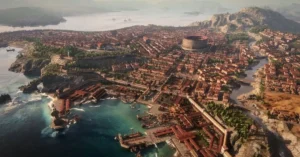
Anno 117: Pax Romana is a masterly achievement. By choosing such a strong ancient setting, Ubisoft Mainz has not only refreshed its formula, but sublimated it. More beautiful, more accessible, but as profound as ever, the game succeeds in integrating relevant narrative and military mechanics into its legendary management loop. It’s a cathedral builder, or rather an aqueduct builder, that will keep you awake until the wee hours of the morning. A new benchmark for the genre.
Rating: 9/10
Views: 1