
Fasten your seatbelts (or obi), and let’s test Yasha: Legends of the Demon Blade!
The Story: Three Fates versus the Nine-Tailed Fox
Yasha: Legends of the Demon Blade plunges us into an alternative Edo Japan, where the peace between humans and demons has been shattered by the arrival of an unhappy villain: the Nine-Tailed Fox. To counter this threat, we are offered the role of not one, but three intertwined characters: Shigure, the immortal ninja wielding the Demonic Blade; Sara, the Oni emissary; and Taketora, the demonic samurai.
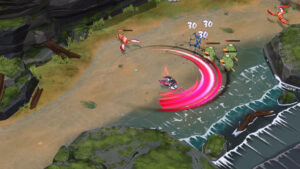
Each character has his or her own storyline, exploring his or her own perspective on events. While the idea of discovering the story from different angles is appealing, critics agree that the narrative struggles a little to captivate. Attempts at humor or drama sometimes fall flat, and the roguelite structure doesn’t always facilitate immersion in the individual stories. There is a sense of narrative ambition, notably in the cinematics and quality Japanese dubbing, but the whole is often described as a little light or lacking the impact to really make an impression. It’s more a backdrop for action than a memorable epic.

Gameplay: Demonic loops and frenzied combat
At the heart of Yasha is pure action-roguelite gameplay. You choose one of three protagonists, each with their own fighting style and unique weapons (long katana, daggers, bow and fists), and embark on “runs” through procedurally generated levels (or at least, with variations). The aim? Get as far as you can, defeating hordes of yokai and devious bosses, and amassing resources to permanently upgrade your character between tries.
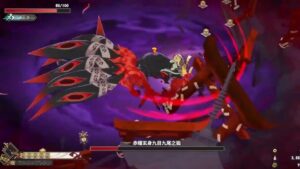
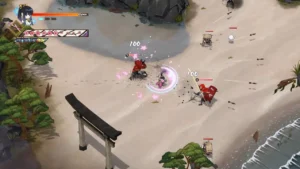
Battles are fast, fluid and crunchy, with a parrying system that, when well mastered, can be satisfying. You collect “Soul Orbs” to unlock talents, visit Neko shrines for blessings, and may even stumble across “Demon Festivals” for bonuses. The game offers a good variety of weapons and skills, encouraging experimentation with different builds.
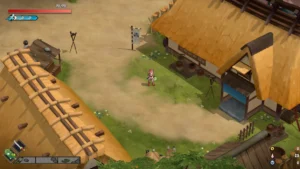
However, there is a high degree of repetitiveness. Even though the three characters offer distinct approaches, the overall progression of runs is often identical, and the same environments and enemy types are quickly revisited. Difficulty can be uneven, with frustrating spikes, particularly on certain bosses. The constant progression is also deemed slow by some, which can make repetition a little tiresome if you don’t really get into the gameplay loop.
Graphics: Stylized and colorful Edo Japan
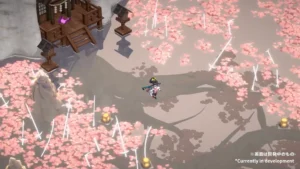
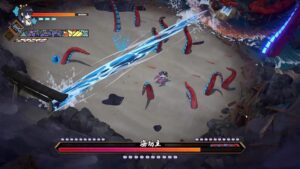
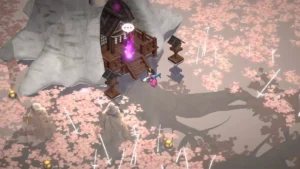
Visually, Yasha seems to pull out all the stops with its Edo-era inspired art direction, blending anime/manga-style character designs (especially in cutscenes and illustrations) with colorful environments. The style is often described as “cute” or “charming”, even when fighting demons. Visual effects in combat are clear, helping to make the action more legible. The game is “visually pleasing” and “artistically successful”, especially for an independent title. It’s not aiming for photorealism, but a polished, consistent aesthetic that works well across platforms, including handheld on Switch.
Music and Soundscape: Echoes of the Land of the Rising Sun
The soundscape contributes to immersion in this whimsical Japan. The music is inspired by traditional Japanese themes, blended with more modern, rhythmic sounds for the action. The Japanese dubbing is an oft-mentioned strong point, bringing character to the characters, even if the story itself doesn’t always captivate. Combat sound effects do the job, with impact sounds that reinforce the “crunch” feel of the confrontations. All in all, a solid soundtrack that accompanies the action without necessarily being unforgettable.
Lifespan: The infinite roguelite cycle
Like any good roguelite, Yasha ‘s lifespan will largely depend on your love for the genre and your perseverance. Finishing a run with one character can take a while, and doing so with all three multiplies the investment. Count on twenty hours or more to see and unlock everything, especially if you’re aiming to master the higher difficulty levels or explore all the weapon and skill synergies. Replayability is intrinsic to the genre, but the repetitiveness of the environments and enemies may limit some players’ desire to dive in again and again once the main stories are over.

Verdict: A nice Roguelite, but lacking a masterful Katana strike
Yasha: Legends of the Demon Blade presents itself as an action-roguelite with some good ideas and a polished execution in several respects. The combat system can be fun, the three characters offer variety, and the visual and sound aesthetics are pleasing. It is even described by some as a good gateway for those intimidated by the roguelite genre, thanks to a sometimes more accessible approach.
However, it seems to suffer from a lack of originality and repetitiveness that can become tiresome over time. The story, though ambitious with its three points of view, doesn’t always manage to hold on, and progression can seem slow. It competes with tenors of the genre (Hades) and struggles to stand out sufficiently to reach the same heights.
Final score: 6/10
This is a title that will undoubtedly appeal to fans of the genre looking for a new gameplay loop in a Japanese-style universe, and who are prepared to overlook a certain redundancy. For others, it may lack that little “extra” that turns a good game into a memorable experience.
Views: 4